Sunday, June 30, 2013
Planting Trees
If you are going to plant a flowering tree in your yard, shouldn't it be an apple, pear or peach?

Saturday, June 29, 2013
They Eat Your Brain
 |
| Using a neti pot. From Oprah.com |
However, several people have died recently from using water contaminated with "brain-eating amoebas" — known to scientists as Naegleria fowleri. These single-celled nasties live in fresh water, especially down south where the water is warm. If you swallow N. fowleri while swimming they die in your stomach acid. If they get up your nose, they travel into your brain, multiply, eat your brain, and kill you. Since 1962, there’s only one documented case of a US patient surviving PAM.
So ... In 2010 and again in 2013, people died from N. fowleri infections in Minnesota. Minnesota, for those not looking at a map, is not down south. The organism is moving north with climate change.
Short of avoiding fresh water swims altogether, public health officials recommend plugging one’s nose during dives or periods underwater. Tightly.
You can see more horrifying information at the Weather Channel, and The Verge.
Humans As A Source of Electricity
Yes, we radiate heat. That heat can be used to generate electricity. A fifteen-year-old girl has invented a flashlight that runs off human heat:
http://www.youtube.com/watch?feature=player_embedded&v=9CCGUMkcbjg
http://www.youtube.com/watch?feature=player_embedded&v=9CCGUMkcbjg
Thursday, June 27, 2013
Contaminated Drinking Water
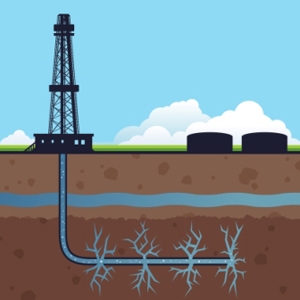
"A study out today in the journal Proceedings of the National Academy of Sciences helps to build the case that the practice of hydraulic fracturing, or “fracking,” does indeed pollute underground water reserves."
Actually, what has been found is that wells close to fracking sites have higher than normal amounts of methane in them. Whether this is due to fracking in general or to poorly maintained fracking equipment is probably not important to the people drinking from those wells.
Cooked

All-time records are likely to be threatened in normally hot places — including Death Valley, Calif., which holds the record for the highest reliably recorded air temperature on earth at 134°F. That mark was set on July 10, 1913, and with forecast highs between 126°F to 129°F this weekend, that record could be threatened.
Wednesday, June 26, 2013
Why?

Because this country is increasingly following the credo of "ignorance and fear", and I wanted to do what I could to push back the darkness.
That's why I did it. To create a subversive army of thinkers and send them off into the world.
To light a candle.
Monday, June 24, 2013
Permeable Roads
The New York State Department of Conservation plans to move forward with a $3 million project to reconstruct a section of Beach Road on State lands and the Lake George Beach parking with porous asphalt and other storm water management features to protect water quality.
Porous asphalt is proposed to be used on most of the road. Regular asphalt will be used on turns and other highly stressed areas. Other storm water management features in the proposal include drainage collection piping and a dry swale for collection and treatment of any excess storm water runoff.
Porous asphalt is proposed to be used on most of the road. Regular asphalt will be used on turns and other highly stressed areas. Other storm water management features in the proposal include drainage collection piping and a dry swale for collection and treatment of any excess storm water runoff.
Subscribe to:
Posts (Atom)