Wednesday, September 18, 2019

Pond

September morning on Chase Pond. A kingfisher watched me take photos of the lady's tresses orchids on the shore.


Nodding Lady's Tresses along the shore

Kingfisher

Low Plain

On a beautiful autumn day we walked out along the trail in the Low Plain Natural Area to the Turtle Point blind.

Shady paths through the woods, warm sun on our faces in the meadows, the smell of the sun on the goldenrods and asters, the trilling of the crickets and murmuring of the chickadees.

Hemlock woods
Goldenrod plants contain an entire ecosystem
Crooked-stem asters have yellow centers to attract bees, then change to red centers after the flowers have been fertilized


Sun-baked meadows

Viburnum
A whole world of predators and prey

Silver-rod, the only white Solidago
 
Approaching the swamp


Daddy Long-legs in the blind with us

Red maple and white pine
Paper birches

Saturday, September 14, 2019

Pollution

Walked around Fisher Meadow in Avon, CT today. First time in a while. The soccer fields have expanded, they fertilize the fields, and the pond is now a fetid, stinking mess. But there were still things to see.
Looks pretty, don't breathe through your nose

Slender Gerardia


Rhamnus cathartica - all natural internal cleanser

Lots of killdeers running around

Cute caterpillar with soft, venomous spines

Closed gentian

I wouldn't want to eat fish from that pond

Wild clematis and Goldenrods


Friday, August 30, 2019

Grafton Pond

Not far from my home in Wilmot Flat, NH, is Grafton Pond.  Owned by the Forest Society, it is full of secret little coves where you can't hear a sound beyond the wind and the loons calling.


Wild Raisin, Viburnum nudum


tall meadow rue

turtlehead

a quiet place for lunch

the last blueberries of the year

momma and baby loon

submerged log

there is a wood duck hiding there

Sunday, August 11, 2019

Pickerelweed Underwater

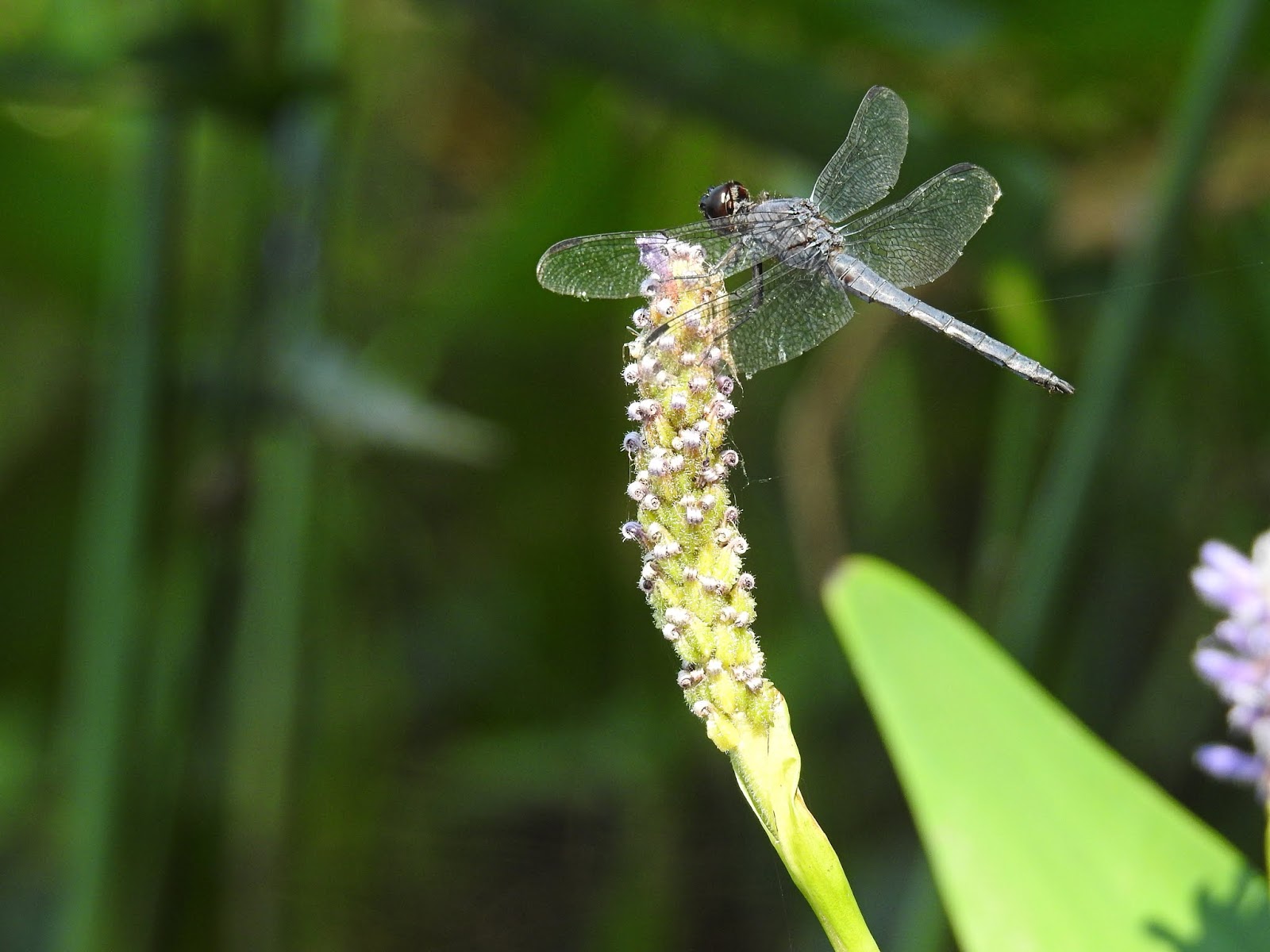
Pickerelweed is a familiar sight in July, covering the edges of ponds with purple. Colonies of pickerelweed provide a hiding place for fish, frogs, salamanders, and of course dragonflies, or as my friend from down south calls them, mosquito-hawks. 


Pickerelweed has a dense root system and stems which protect shorelines from erosion. This root system allows the colony to spread rapidly, but there is another way that pickerelweed spreads.

 
At the beginning of August, just about the time that arrowhead (duck potato, katniss, swamp potato, or wapatoo) starts to bloom, 

arrowhead (duck potato, katniss, swamp potato, or wapatoo)


the petals fall from the pickerelweed flowers and the stalks sink below the water. This probably helps protect the seeds from birds, but later on the seed heads fall off. Wind, waves, and currents roll the seed heads away to start new colonies.


Friday, August 2, 2019

Friendly Air Patrol

No mosquitoes on the pond this morning. Hundreds of dragonflies and thousands of spiders are taking care of them. 

I spent the entire morning floating in the shade with a good book, reaching up over my head to grab plump, ripe blueberries. Squadrons of dragonflies patrolled the pickerelweed. 

I just had to be careful that I wasn't grabbing a plump, ripe spider.